
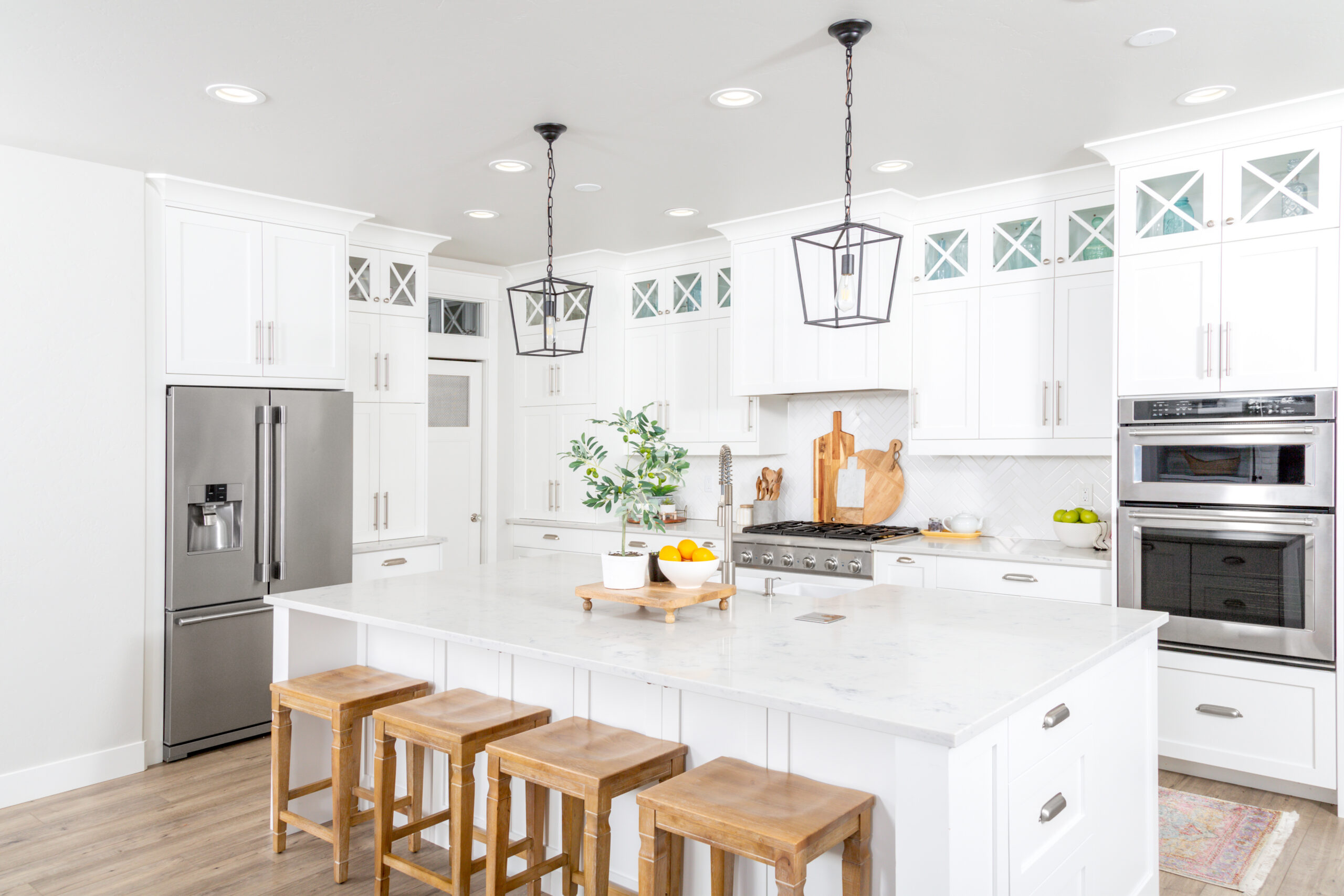
Quick Answer: Minimum Sizes and Clearances for a 4-Stool Island
If you want four comfortable seats, plan for an island that is at least 9 feet long and about 36 to 42 inches deep. Give each seat 24 to 30 inches of width and 12 to 15 inches of overhang for knees. Around the island, leave a clear path of 42 inches for a one-cook kitchen or 48 inches if two people often cook together. These measurements reflect a practical standard kitchen island size that works in most homes.
- Minimum island length for 4 seats: 96 inches with compact stools, 108 inches preferred
- Minimum island depth for seating on one side: 36 inches, 42 inches is more comfortable
- Overhang: 12 inches for a 36 inch counter, up to 15 inches if you want more knee room
- Seat width per person: 24 inches minimum, 28 to 30 inches for larger stools
- Clearance around island: 42 inches minimum, 48 inches for busy or multi-cook kitchens
- Counter height: 36 inches is most common and easiest for everyday use
High Quality Contracting helps homeowners across southeastern Wisconsin plan and build islands that fit the room and the way you live. If you work in a space that is tight or has tricky traffic patterns, their design-first process can solve it with smart layout choices.
What Counts as a Standard Kitchen Island Size?
There is no single size that fits every kitchen, but designers use a few benchmarks. A standard kitchen island size for seating typically starts at 36 inches deep and 60 to 72 inches long for two or three stools. Once you add a fourth seat, the length grows fast. The reason is simple. People need elbow room and safe walking paths, and appliances need doors to open.
- Small island with seating: about 36 by 60 inches, seats two
- Mid-size island: about 36 by 72 inches, seats three
- Large island for four: about 36 to 42 inches deep by 96 to 108 inches long
Depth is as important as length. You need a 12 to 15 inch seating overhang for knees. If you also want cabinets on both sides of the island or back-to-back storage, overall depth can reach 48 to 54 inches. High Quality Contracting often designs two-tier or waterfall-edge islands to gain storage while keeping seating comfortable.
How to Calculate the Right Island for Four Stools
Step 1: Plan the width for each seat
Count on at least 24 inches of counter width per stool. If your stools have arms or wider seats, plan for 28 to 30 inches per person. For four seats, that means a minimum of 96 inches. Add a 3 to 6 inch buffer at each end so the outside seats do not feel squeezed. Many homeowners find 108 to 120 inches ideal for four roomy stools.
Step 2: Set the overhang and knee clearance
Comfort depends on knee room. These are common guidelines many designers use for overhang depth by counter height:
- 30 inch table height: 18 inch overhang for knees
- 36 inch counter height: 12 to 15 inch overhang
- 42 inch bar height: about 12 inch overhang
Most kitchens use a 36 inch counter height because it balances prep work and seating comfort. If you plan for 12 to 15 inches of overhang, discuss support with your contractor. Many stone tops can span 10 to 12 inches without brackets, but longer spans often need concealed steel supports or corbels. High Quality Contracting sizes and hides these supports so your knees do not bump into them.
Step 3: Choose aisle widths around the island
Clearances set the flow of your kitchen. Less space slows cooking and can create safety issues. Aim for:
- 42 inches between island and main run of cabinets for a one-cook kitchen
- 48 inches if two people prep and cook together
- 36 inches in very tight spaces as an absolute minimum walking path
Across from the range, dishwasher, or fridge, a wider aisle gives room to open doors without blocking movement. If you have a wall oven or dishwasher across from the island, make sure there is space to stand and pass when the door is open. Many designers plan at least 21 inches behind an open dishwasher door.
Step 4: Check appliance and sink locations
Island size must work with your zones. Keep these ideas in mind:
- Prep and sink zone: Place the main sink near trash and dishwasher. Leave at least 24 inches of counter on one side of the sink and 18 inches on the other.
- Range zone: Keep a landing spot of at least 12 inches on both sides of a cooktop. If your cooktop is on the island, you will need ventilation and extra safety space for handles and splatter.
- Fridge zone: Keep a 15 inch landing spot near the handle side of the fridge. Avoid placing the fridge so it opens into a narrow aisle at the island.
Step 5: Confirm the room can handle it
Use a simple formula. Room width equals base cabinet depth plus aisle plus island depth plus opposite aisle plus opposite cabinet depth if you have cabinets on both sides. As a quick rule, a kitchen that is at least 13 to 14 feet wide can often fit a 36 inch deep island with 42 inch aisles on both sides. Open concept plans can fit a big island more easily because one side may open to a dining or living area. High Quality Contracting can map this out in a measured drawing before you commit.
Layout Ideas That Fit Four Stools
Open concept kitchens
If one side of your island faces a living or dining space, it is easier to reach 48 inch aisles without shrinking the kitchen. Four stools line up on the living side, while the kitchen-facing side stays clear for prep. This keeps guests out of the main work path during parties.
L-shaped kitchens
L-shaped layouts work well with a 9 to 10 foot island. You can center the sink in the island to face the room and set the range along the longer L leg. Make sure the fridge door swing does not intrude on the main aisle. Plan drawers and pullouts to avoid handle collisions at the corner.
U-shaped kitchens
U-shaped designs need careful aisle planning. If you want four seats, consider placing all four on the open side of the U. Maintain at least 42 inches on both inside aisles. Short islands or peninsula-style islands with a rounded end can still fit four people if you place two seats along the side and two across the end.
Galley kitchens
True galleys are usually too narrow for a four-stool island with proper aisles. You may fit a slim island or a one-sided peninsula with three seats instead. If four seats are a must, consider opening a wall to create enough space.
Counter Height vs Bar Height vs Table Height
Counter height at 36 inches is the most universal. It is easier for kids, ideal for prep work, and works with standard stools. Bar height at 42 inches gives a visual barrier to the sink and prep mess. It uses smaller stools but can be harder for short guests and older adults. A table height ledge at 30 inches is the most comfortable for long meals and for accessibility. It needs more overhang depth and careful support. High Quality Contracting can design multi-height islands that step down to a table zone or step up to a serving rail, which can solve many layout issues while keeping the look clean.
Seating Comfort Tips for Four Stools
- Plan 24 to 30 inches per seat. If your stools swivel or have arms, go wider.
- Avoid placing a stool at a sharp corner. People bump knees there. Either clip the corner or skip a seat at the corner.
- Set a footrest 7 to 9 inches above the floor on 36 inch counters. If your stools lack a foot ring, add a metal foot rail under the overhang.
- Leave at least 6 inches of counter at each end of the seating row so end seats feel comfortable.
- Check stool height before buying. Standard counter stools fit 36 inch counters. Bar stools fit 42 inch tops.
- Use durable finishes on the stool seats. Kitchens see spills and scuffs.
Storage, Power, and Lighting That Make the Island Work
Your island can do more than hold stools. Plan storage and utilities from the start. Many building codes require at least one receptacle on islands. Ask your contractor how to meet local code while keeping the look clean. Options include pop-up outlets, end-panel outlets, and charging drawers.
- Trash and recycling: Place a pullout near the sink or prep area on the island.
- Microwave drawer: A safe, clean look that keeps counters open.
- Deep drawers: Great for pots, pans, and mixing bowls. They are easier to reach than doors with shelves.
- Lighting: Combine recessed cans for general light with two or three pendants over the seating zone. Dimmer switches help set the mood.
- Ventilation: If you place a cooktop on the island, plan for a hood or downdraft. Venting affects joists and ceiling design, so involve a pro early.
High Quality Contracting coordinates electrical, plumbing, and HVAC to avoid surprises. Their in-house carpenters and design support help you make smart decisions that meet code and match your style.
Top Mistakes to Avoid With a Four-Stool Island
- Shortchanging aisle space. Crowded aisles make the kitchen feel cramped and hurt resale value.
- Packing stools too close. People need elbow room to enjoy meals and conversation.
- Skipping support for big overhangs. Heavy stone can crack if not supported correctly.
- Putting a cooktop next to seating without a safety plan. Hot pans and kids do not mix.
- Forgetting landing space next to major appliances. You need a place to set groceries and hot pans.
- Overlooking stool storage. If stools tuck under the overhang, check leg clearance and apron height.
Materials and Edge Details That Improve Comfort
Choose a durable, easy-to-clean top like quartz for heavy use. Granite and quartzite also hold up well. Softer woods add warmth for a furniture-style island but need more care. For comfort, pick a rounded edge profile that is gentle on forearms. Waterfall ends create a modern look and protect cabinet sides in busy households. If you prefer a thin, sleek top, talk to your contractor about steel plates or brackets to keep a long overhang rigid.
Budget and Planning Tips
- Set priorities. Decide if seating, storage, or cooking is the top goal. This guides size and features.
- Get a scaled plan. Even a half inch on paper can change real-world aisle widths.
- Order stools early. Measure the exact width and seat height to confirm spacing.
- Place outlets where you need them. Think mixers, laptops, and phone chargers.
- Pick lighting with good color rendering. Food and finishes look better with quality light.
Frequently Asked Questions
Can my 10 by 10 kitchen fit a four-stool island?
Most 10 by 10 kitchens are too tight once you include cabinets and aisles. You need space for the island depth plus at least one 42 inch aisle, and often two. Consider a peninsula or three-seat island instead, or open a wall to gain room.
What is the best island size for four stools if I only seat on one side?
Plan for at least 96 inches of length and 36 inches of depth, with a 12 to 15 inch overhang. A 108 inch length feels more relaxed and allows an end buffer so the outside seats do not crowd corners.
How high should the countertop be for family use?
A 36 inch counter height suits most families for both prep and casual meals. It works well for homework, crafts, and snacking too.
Do I need supports under a 12 inch quartz overhang?
Many quartz brands allow up to 12 inches unsupported, but limits vary. Large spans or heavy natural stone may need hidden brackets. Ask your installer to follow the manufacturer’s rules for your specific material.
Should I put a sink or cooktop in the island with four stools?
A sink in the island works well because it serves prep and cleanup and keeps conversation flowing. A cooktop near seating can be less comfortable due to heat and splatter. If you install a cooktop on the island, plan clear zones, ventilation, and extra depth if possible.
Why Homeowners Trust High Quality Contracting for Kitchen Islands
High Quality Contracting, Inc. has served southeastern Wisconsin for more than 25 years. Based in Muskego and working across Milwaukee, Waukesha, Racine, Kenosha, and Ozaukee counties, their licensed and insured team brings design-first planning and skilled carpenters to every project. They handle kitchen remodeling, custom cabinetry, electrical upgrades, flooring, and more. That means your four-stool island, storage layout, and finishes all work together.
The company holds an A+ rating with the Wisconsin Better Business Bureau and has been accredited since 2009. They are a NARI member and have earned Angi Super Service Awards. Reviews often praise their communication, job site cleanliness, and attention to detail. When it is time to choose the right standard kitchen island size for your home, the High Quality Contracting team can show you measured drawings, 3D views, and a clear proposal so you feel confident before work begins.
Ready to plan your island? Call High Quality Contracting at 414-405-7542. Typical hours are Monday through Friday 7 AM to 6 PM and Saturday 7 AM to 3 PM. Or email Nick@highqualitycontractinginc.com to schedule a consultation.
Planning Checklist: Four Stools Done Right
- Confirm room size with a scaled plan.
- Choose counter height and overhang depth.
- Allocate 24 to 30 inches per seat, with end buffers.
- Set 42 to 48 inch aisles based on how many people cook.
- Place sink, trash, and dishwasher for a smooth prep zone.
- Verify door swings and landing areas for appliances.
- Coordinate outlets, lighting, and any ventilation early.
- Confirm overhang supports with your countertop fabricator.
- Order stools and test spacing before finalizing the top cut.
- Walk the layout on site with your contractor before installation.
The Bottom Line
For most homes, a comfortable four-stool island measures at least 9 feet in length and 36 to 42 inches in depth, with 12 to 15 inches of overhang and 42 to 48 inches of clearance all around. That standard kitchen island size gives every person a real seat and keeps your kitchen safe and efficient. If your space is smaller or has unique features, a custom design can still deliver the look and function you want. High Quality Contracting brings the planning, craftsmanship, and communication that make a big difference from the first sketch to the last seat installed.