
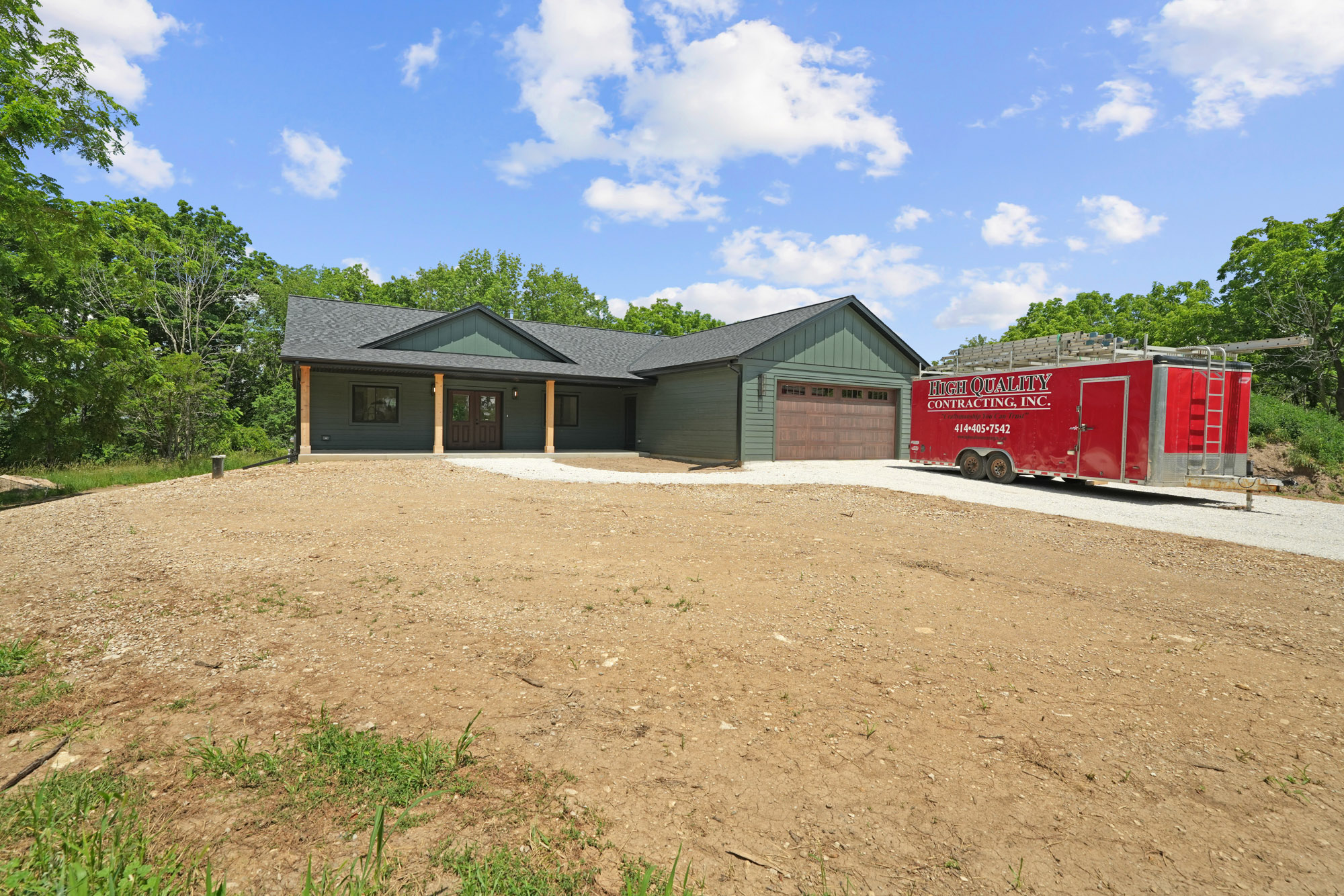
Residential setback requirements affect almost every project on your property, from a new deck to a full addition. If you are wondering how close you can build to your property line, you are not alone. This guide explains what setbacks are, how to find your exact numbers, how permits work, and the most common exceptions. For homeowners across southeastern Wisconsin, High Quality Contracting can help you plan a project that fits your lot and passes inspection the first time.
What Are Residential Setback Requirements?
Setbacks are minimum distances that buildings and certain features must maintain from property lines and other protected areas. They create space for safety, privacy, light, drainage, and access. Your local zoning code lists the setbacks for your lot based on your zoning district and the type of structure you want to build.
Most lots have separate setbacks for the front yard, street side on a corner, interior side yard, and rear yard. Accessory structures like sheds and detached garages often follow different, sometimes smaller, setbacks than a main house. Decks, porches, pools, fences, and driveways may have their own rules. If a utility easement or drainage swale crosses your lot, you usually cannot build in that area at all.
Why Setbacks Vary by City, County, and Neighborhood
There is no single statewide setback chart that fits all lots. Even near each other, two cities can set different distances for the same type of project. Local governments tailor zoning to lot sizes, street patterns, and safety needs. Homeowner associations may add stricter standards on top of city or county rules. Older neighborhoods may also have overlay districts that protect a historic street pattern.
In southeastern Wisconsin, communities like Muskego, Milwaukee, Waukesha, Racine, Kenosha, and Ozaukee County suburbs each publish their own zoning ordinances. While many rules look similar, the numbers and definitions can change from one place to the next. That is why your first step is to confirm the exact zoning for your parcel and then read the setback table that applies to that zoning district.
How to Figure Out Your Setbacks in Southeastern Wisconsin
Here is a simple path to find the right numbers for your lot so you can plan with confidence.
- Identify your zoning district. Look up your address on your city or village zoning map or call the planning and zoning office.
- Download the zoning code section for your district. Find the table that lists yard setbacks, lot coverage, and structure height.
- Check any overlay zones. Examples include shoreland, floodplain, conservation, or historic overlay districts.
- Confirm whether your lot is interior, corner, through lot, cul-de-sac, or flag lot. Lot type can change which side is the front yard and which is the street side yard.
- Review accessory structure rules. Sheds, detached garages, and accessory dwelling units often follow different side and rear setbacks.
- Note special restrictions. Look for easements, drainage corridors, utility vaults, septic and well protection zones, tree preservation areas, or bluff setbacks.
- Verify with a current survey. A recent survey or site plan confirms your exact property lines and helps measure setbacks correctly.
If you work with High Quality Contracting, we handle these steps during preconstruction. Our team reviews your local zoning, coordinates with the building department, and creates a site plan that lines up with residential setback requirements before any work starts.
Typical Setbacks for Common Projects
Home additions
Most communities require larger setbacks for your main house than for accessory buildings. Side yard setbacks often range from a few feet on narrow lots to more than 10 feet on larger lots. Rear yard setbacks can range from 15 to 30 feet or more. Corner lots usually have a deeper street side setback for visibility. Some cities also limit how much of your lot can be covered by buildings and hard surfaces. Even if a wall can legally sit closer to the line, fire safety rules from the Wisconsin Uniform Dwelling Code can restrict window openings and materials if a wall is very close to the lot line. High Quality Contracting designs additions that respect both zoning and building code, balancing interior space with code-compliant exterior walls and eaves.
Decks and porches
Deck setback rules vary a lot. Some cities count decks as part of the principal structure, especially when they are more than a set height above grade. Others have smaller setbacks for open decks. Covered or enclosed porches usually follow the same setbacks as the house. Many codes allow stairs and railings to project a short distance into a setback, but not all. Our team checks whether your deck is considered open, covered, or enclosed and designs the size and stair location to fit the allowed yard clearances.
Detached garages and sheds
Detached accessory structures often have smaller side and rear setbacks than the house, which can help you tuck a garage or shed near the back of the lot. There may be height limits and maximum floor area for each structure, plus a total accessory square footage cap. Many codes require accessory buildings to sit behind the front line of the house. If you plan a large detached garage with workshop space, we check whether its size or placement changes the setback or triggers a conditional use review.
Fences
Fence rules are different from building setbacks. Many areas let you place a fence right on the property line, but they still control height and style near the front yard and street corners. Corner visibility triangles often limit fence height near intersections and driveways. If you share a line with a neighbor, it is best to confirm the pins with a surveyor and get written agreement on placement and maintenance. High Quality Contracting can install fences that fit local height limits and preserve sightlines.
Driveways and parking pads
Driveways often have side yard separations from the lot line or from the house. Your community may also limit the width of a driveway at the curb and within the front yard. If you plan a new parking pad or an expansion, we review impervious surface limits and stormwater rules. Good planning keeps water flowing away from foundations and neighboring lots.
Pools and hot tubs
Swimming pools and spas carry extra rules for safety and setbacks. Local codes can set minimum distances from property lines, houses, and accessory buildings. Electrical clearances, fences with self-closing gates, and barrier heights are common requirements. Many areas regulate pool placement in easements. We coordinate with inspectors so your pool plan meets zoning setbacks and building safety standards.
Special Rules Near Water, Corners, and Easements
Beyond basic yard setbacks, special areas can change how close you are allowed to build.
- Shoreland zoning near lakes and rivers. Wisconsin shoreland rules often require deeper setbacks from the ordinary high water mark, commonly around 75 feet for principal structures, with local adjustments and exceptions. There may be limits on hardscape in a buffer area and extra erosion control measures.
- Floodplain areas. Building in mapped flood zones requires elevation and anchoring standards, and sometimes deeper setbacks. A floodplain development permit may be needed.
- Corner visibility triangles. On corner lots and at driveways, structures and fences must stay out of a clear sight triangle to protect drivers and pedestrians.
- Easements and drainage ways. Utility and stormwater easements usually prohibit permanent buildings, and many restrict decks and sheds. These are shown on your plat or survey.
- Septic systems and private wells. If your property uses a private system, state and local rules set minimum separation distances to tanks, fields, and wells. Always verify these clearances before planning additions or pools.
How to Measure Setbacks the Right Way
Setbacks are measured from the property line, not from a sidewalk or a neighbor’s fence. Misreading the line is one of the most common mistakes. Follow these steps to measure correctly.
- Use a current survey or certified site plan that shows property lines, lot dimensions, and easements. If you cannot find one, consider hiring a licensed surveyor.
- Locate iron pins or monuments at lot corners. These markers confirm where the line sits on the ground.
- Measure perpendicular to the property line to the closest point of the structure. Include overhangs, eaves, bay windows, chimneys, and other projections if your code counts them.
- Check height rules and fire separation rules if any wall is near the line. Even if a wall meets the yard setback, window openings and materials can still be limited at close distances.
- Document measurements on a simple site sketch for your permit application.
High Quality Contracting builds a scaled site plan to remove guesswork. Our carpenters and design support team confirm all measurements before staking layout in the yard.
Permits You May Need Before You Build
Most projects near a property line require at least one permit. This protects you and your neighbors and speeds up inspections later.
- Zoning review. Confirms your project fits lot size, setbacks, height, and coverage limits.
- Building permit. Checks plans against the Uniform Dwelling Code for structure, fire safety, energy, and egress.
- Electrical, plumbing, and HVAC permits. Required when adding circuits, fixtures, or ducts.
- Erosion control or stormwater permit. Common for additions, new garages, or big hardscape changes.
- Driveway or right of way permit. Needed when you modify a curb cut or work in the public way.
- Shoreland or floodplain approvals. Required in mapped environmental areas.
As a licensed and insured general contractor, High Quality Contracting handles permit paperwork and inspector coordination for you. Our office stays in touch with local building departments across Milwaukee, Waukesha, Racine, Kenosha, and Ozaukee counties to keep your project moving.
Can You Get an Exception or Variance?
Sometimes a lot is unique. Maybe your lot is very narrow, has a steep slope, or includes a large easement. In such cases, you can ask the zoning board for a variance. A variance does not change the law in general. It grants a specific relief for your property based on a hardship that is not self-created. Boards look at whether the request is the minimum needed and whether it protects neighbors and the public interest. You will need a site plan, a narrative of hardship, and sometimes neighbor input. Some projects may qualify for administrative exceptions that are smaller and faster than a full variance. High Quality Contracting prepares clear drawings and supports your application if a variance is the right path. We also offer design alternatives that can avoid a variance when possible.
Common Mistakes to Avoid
- Guessing at the property line. Never rely on a neighbor’s fence or a rough tape measure to set your layout.
- Forgetting eaves and stairs. Many codes count projections when measuring setbacks.
- Overlooking fire safety limits. Close lot lines can change window placement and wall materials.
- Ignoring easements. Utility and drainage corridors can void a project if you build in them.
- Skipping permit review. Unpermitted work near a lot line can lead to fines or forced removal.
- Missing HOA rules. Many associations add design and placement limits even if zoning allows more.
- Not calling 811. Always contact Diggers Hotline before you dig to mark underground utilities.
How High Quality Contracting Helps You Build Within the Rules
High Quality Contracting, Inc. has guided homeowners through residential setback requirements for more than 25 years. Based in Muskego, we plan and build across southeastern Wisconsin with an in-house team of skilled carpenters and design support. Our approach is simple and thorough.
- Site and code review. We confirm zoning, read the setback tables, and check overlays early.
- Measured surveys and layout. We work from current surveys and create accurate site plans.
- Design-first planning. Our team balances your goals with setbacks, lot coverage, and code.
- Permit management. We coordinate with your city or village so approvals are complete and clear.
- Craftsmanship and clean sites. We build to last, keep your property tidy, and protect neighbors.
- Transparent communication. We share drawings, timelines, and costs so there are no surprises.
Our reputation reflects this process. High Quality Contracting holds an A+ rating with the Wisconsin BBB, is a NARI member, and has earned Angi Super Service Awards. Reviews often highlight our workmanship, communication, and respect for clients’ homes. Whether you need a new deck that fits a tight side yard, a kitchen expansion that respects rear setbacks, or a detached garage along the back line, our team can deliver a code-compliant solution.
Frequently Asked Questions
Do all cities use the same setbacks?
No. Setbacks change by city, village, or county and by zoning district. Always check your local code and confirm your lot’s zoning before designing.
What if my old house already sits in a setback?
That is called a legal nonconforming structure if it was built under prior rules. You may be allowed to maintain it, but expansions within the setback are often limited. We can review options with your zoning office.
Can my eaves or gutters cross into a setback?
Many codes allow small projections into setbacks, but the amount varies, and they usually cannot cross the property line. Check your local limits for eaves, chimneys, bay windows, and stairs.
How close can I build a wall with windows to the side lot line?
Even if zoning allows a close wall, building codes can restrict window openings and require fire-resistant construction at close distances. We adjust layouts and materials to meet both rules.
Who decides the front yard on a corner lot?
Your zoning code defines the front yard and street side yard on corners. The decision can affect setbacks. Planning this early can save redesign time.
Do I need a new survey?
If your project is close to a property line, a current survey or certified site plan is strongly recommended. It protects you from costly mistakes and speeds up permit approval.
What about shoreland rules near lakes and rivers?
Shoreland zoning often sets deeper setbacks from the water, limits hard surfaces, and adds erosion control. Many areas use a 75 foot standard from the ordinary high water mark for principal structures, with specific local provisions. We help you navigate these layers.
Your Next Steps
Before you sketch that new addition or place a shed pad, confirm your residential setback requirements and measure from the true property lines. If you are in Milwaukee, Waukesha, Racine, Kenosha, Ozaukee, or neighboring communities, High Quality Contracting can visit your site, review your zoning, and build a plan that fits your lot and your budget. Our team can design, permit, and construct kitchens, bathrooms, basements, exterior upgrades, decks, siding, roofing and gutters, home additions, new builds, and much more.
Get Started with a Site Check and Quote
Talk with a local contractor who knows your city’s rules and cares about the details. Contact High Quality Contracting to schedule a consultation.
- Phone: 414-405-7542
- Email: Nick@highqualitycontractinginc.com
- Hours: Mon to Fri 7 AM to 6 PM, Saturday 7 AM to 3 PM
We will verify your property lines, confirm setbacks, and present a clear proposal with design options that meet code and match your style. With careful planning and dependable craftsmanship, you can make the most of your lot and build with confidence.
Note: This article provides general information for homeowners. Codes and permit processes can change. Always confirm your local rules with your city or village. High Quality Contracting is ready to help you through each step so your project is safe, legal, and built to last.