
What Is a Load Bearing Wall?
A load bearing wall carries weight from above and transfers that load down to the foundation. It may support floor joists, ceiling joists, roof framing, or a second story. Non-load-bearing walls only divide rooms and do not carry structural loads. Many homes have a mix of both. The tricky part is that looks can be deceiving. A thin wall can be structural, and a thick wall can be non-structural. The only safe way to be sure is to inspect the structure or have a qualified professional verify it.
5 Signs the Wall Is Load Bearing
1. The wall runs perpendicular to floor or ceiling joists
In most stick-framed homes, joists rest on supports that cross them at a right angle. If a wall runs perpendicular to the joists above, it often means the wall is carrying their weight. You can check joist direction from the basement or crawl space by looking up at the framing, or from the attic by looking down at the ceiling framing. If joists end or overlap on the wall in question, that is a strong indicator it is structural.
2. There is another wall, beam, or column stacked above or below
Load paths travel straight down. If you see a wall or a post directly below the wall you want to remove, or another wall directly above it on the next floor, that alignment suggests the wall is supporting a load. In basements, look for steel columns, beams, or bearing walls that line up with first floor walls. In attics, look for beams, knee walls, or truss points that land near the wall below.
3. The wall sits under a ridge, girder, or major opening
If the wall sits under a ridge beam, a large roof opening, or under a long span in the floor system, it may be taking on that load. Roof systems can be complex in Wisconsin homes, especially with dormers and vaulted ceilings. When rafters bear on a ridge beam or a girder, the support below must continue down. If your wall is part of that line, assume it is structural until proven otherwise.
4. You find heavy framing, multiple top plates, or joist hangers
Structural walls tend to have beefier framing details. Clues include double top plates that tie into other framing, studs packed tight together, headers over doorways with jack studs, or joist hangers attached to the top plate. In some homes built around mid-century, you may also see built-up posts inside walls made of multiple studs or LVL. These signs point to a load bearing condition.
5. Removing the wall would change how stairs, chimneys, or trusses are supported
Walls near stair openings, chimney chases, or under roof trusses often provide bracing and support. If the wall you want to remove stabilizes a stairwell or encloses a chimney with support framing, it likely carries load. In truss-framed homes, some interior walls are still designed as bearing points. That means even if joists run parallel to the wall, the truss layout may send loads down at that location.
Risks of Removing a Load Bearing Wall Without Proper Support
Tearing out a structural wall without a plan can lead to costly and dangerous problems. Even partial cuts or notching can weaken the structure. Here are the common risks homeowners face when they skip proper load bearing wall removal steps:
- Sagging ceilings and floors that get worse over time
- Cracked drywall, tile, and plaster that keep reappearing
- Doors and windows that stick or go out of square
- Uneven floors that feel bouncy or soft
- Roof dips that can lead to leaks and ice dams
- Foundation stress due to misplaced point loads
- Safety hazards for your family and workers
- Permit violations and issues if you sell the home
How Pros Evaluate a Wall in Wisconsin Homes
High Quality Contracting has helped homeowners in Muskego, Milwaukee, Waukesha, and across southeastern Wisconsin open up their floor plans safely for over 25 years. Our team looks beyond finishes to study how your home was built. Cold climate roof loads, snow weight, and local building practices matter. We factor those into every plan. A typical evaluation includes the steps below.
- Review the home’s age, style, and framing type, including basement, crawl space, or slab details
- Trace load paths from the roof down, noting joist and beam directions
- Open small exploratory holes to confirm framing sizes, spacing, and bearing points
- Identify plumbing, electrical, HVAC, and gas lines that may run through the wall
- Assess foundation capacity for new point loads and post locations
- Recommend beam type, size, and installation method, then coordinate engineering as needed
- Prepare permit-ready drawings and submit to the local building department
Load Bearing Wall Removal Checklist
Thinking about opening a kitchen to the living room or combining small rooms into one? Use this checklist to plan a safe, code-compliant project.
- Confirm if the wall is structural through professional assessment
- Hire a licensed contractor for design and cost planning
- Obtain an engineered beam plan if required by your city or county
- Apply for permits with accurate scope and drawings
- Plan temporary shoring walls before any demo begins
- Select beam type, either LVL, steel I-beam, or a combination
- Map utility reroutes for electrical, plumbing, and HVAC
- Verify posts, footing sizes, and any slab or basement upgrades
- Schedule inspections for rough framing and final approvals
- Finish with drywall, trim, flooring patches, paint, and lighting
What Happens During Professional Removal
Every home is different, but most load bearing wall removal projects follow a proven process. High Quality Contracting coordinates each step with clear communication and tidy job sites to keep your home as livable as possible.
Temporary shoring
We build temporary support walls on both sides of the existing wall to carry the load safely during removal. Shoring spacing and materials are sized based on span and load.
Careful demolition
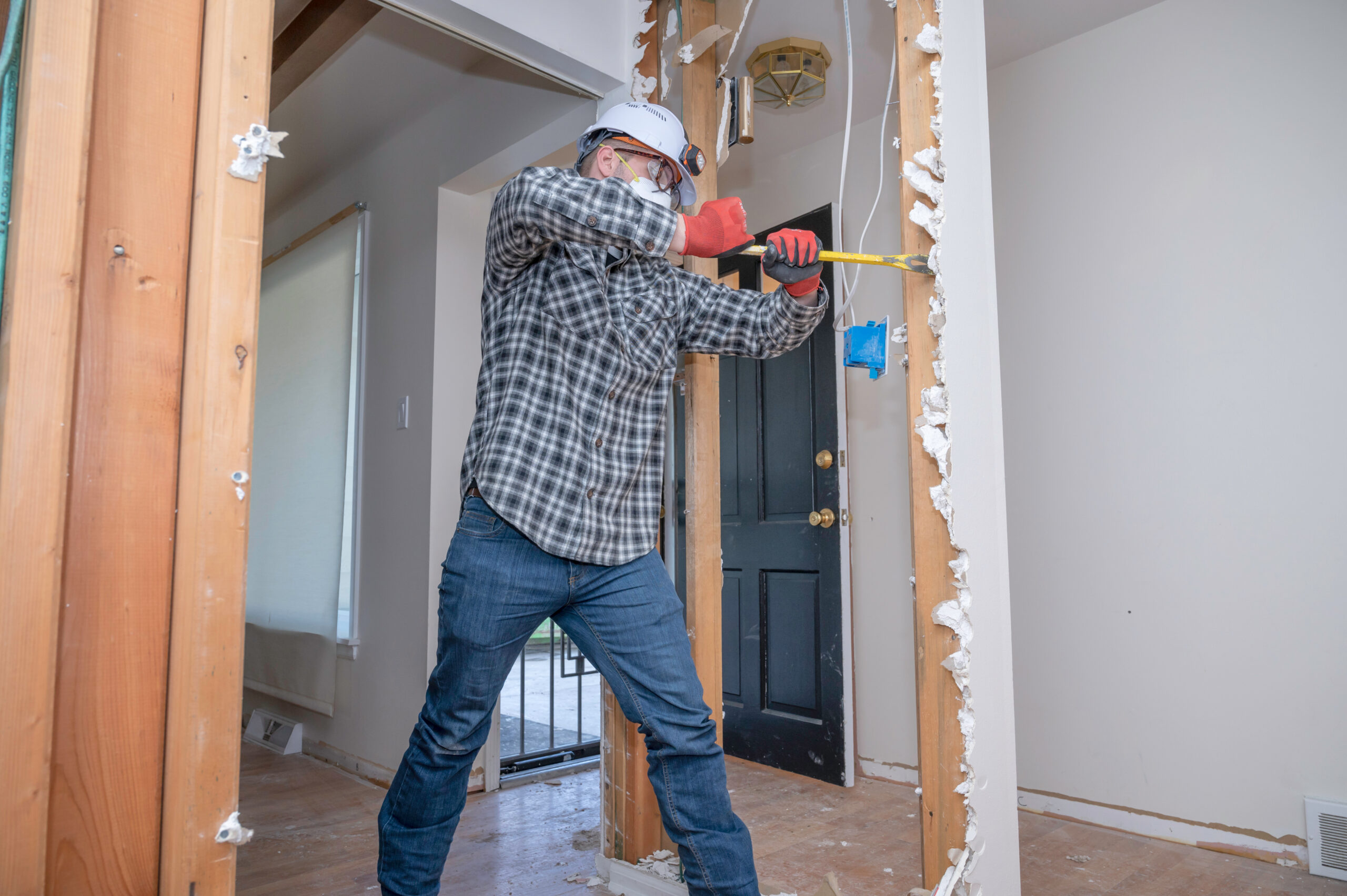
Our crew removes drywall and finishes, marks utilities, and disconnects service lines. We then take out studs and the header in a controlled order so loads remain supported.
Beam installation
We lift the engineered beam into place. Depending on design, it can be a drop beam that sits below the ceiling or a flush beam recessed into the joists for a cleaner ceiling line. Beams are often made of LVL, steel, or a hybrid. Connections use approved hangers and fasteners per the engineer and code.
Posts and footings
Loads from the new beam transfer down through posts into solid bearing. In basements or on slabs, we may add new concrete footings to spread the load. On framed floors, we add posts down through walls to a beam or foundation support that can handle the load.
Inspections and finishing
We schedule inspections, then close up with drywall, trim, flooring patches, and paint. If lighting and switches move, our licensed electricians update those circuits to code. When we finish, you get a clean, open space that looks like it has always been part of the home.
Costs and Timelines in Southeastern Wisconsin
Actual costs depend on span length, beam type, finishes, and utility changes. A simple one-story wall with a short span and few utility moves costs less. A long span, flush beam, new footings, and extensive reroutes costs more. Most projects fit into a few days to two weeks of on-site work, not counting permitting and engineering lead times.
- Key cost factors include span length, number of posts, and beam material
- Engineering requirements and permit fees set by your city
- Electrical, plumbing, and HVAC reroutes hidden in the wall
- Finishes like matching hardwoods, tile, and premium trim
- Access conditions, such as carrying steel through a finished home
High Quality Contracting provides detailed proposals up front so you understand options and pricing before we start. Our design support helps you decide between a drop beam that is visible and a flush beam that gives a smooth ceiling line.
Design Ideas After Removal
Once the structure is secure, the fun begins. Opening a wall can transform how you use your space.
- Add a kitchen island with seating, storage, and new task lighting
- Create a better dining and living flow for hosting family and friends
- Increase natural light by sharing windows across spaces
- Run continuous flooring for a seamless look from room to room
- Use a cased opening or partial wall to keep subtle separation
- Incorporate built-in shelving or a fireplace to anchor the new room
- Choose a flush beam for a clean ceiling or highlight a stained wood beam for character
Permit and Code Requirements in the Milwaukee Area
Most municipalities in southeastern Wisconsin require permits for structural changes. That includes the City of Milwaukee, Waukesha County, Racine County, Kenosha County, and Ozaukee County. Inspectors will check beam sizing, connections, post bearing, footings, smoke alarms, and electrical updates. High Quality Contracting handles permitting, coordinates inspections, and ensures that your project meets or exceeds local codes. Our membership in NARI and our A+ BBB rating reflect our commitment to doing it right the first time.
DIY or Hire a Pro?
Some parts of a remodel are great for DIY, like painting or simple trim. Load bearing wall removal is not one of them. Even experienced DIYers can miss hidden loads or underestimate reroutes. Mistakes can lead to costly fixes and safety risks. If you want to be hands-on, consider handling design selections, paint, or post-project decor. Leave structure, shoring, beam work, and utilities to licensed professionals with insurance, tools, and training. High Quality Contracting can tailor a plan that fits your budget and comfort level while keeping your home safe.
Why Choose High Quality Contracting
High Quality Contracting, Inc. is a licensed and insured general contractor based in Muskego with more than 25 years of experience serving homeowners across southeastern Wisconsin. We are a NARI member, maintain an A+ rating with the BBB, and have earned Angi Super Service Awards. Our in-house carpenters and design support manage your project from planning through final clean up. We believe in craftsmanship, clear communication, and respectful job sites. From kitchen and bathroom remodeling to home additions, decks, roofing, and custom cabinetry, we bring the same standards to every project, including structural work like load bearing wall removal.
- Design-first planning with clear, detailed proposals
- Permit and inspection management for a smooth process
- Engineered solutions that protect your investment
- Skilled carpenters who install beams, posts, and finishes with care
- Clean, respectful job sites that keep your home livable
- Local knowledge of Milwaukee area codes and inspectors
Frequently Asked Questions
How can I tell for sure if a wall is load bearing?
Clues help, but the only sure way is through professional assessment. That includes tracing framing, opening small inspection holes, and sometimes involving an engineer. High Quality Contracting can confirm and provide a safe plan.
Do I need an engineer for my project?
Many wall removals require a beam sized by a structural engineer, especially for longer spans, two-story loads, or roof loads. We coordinate engineering so your design meets code and gets approved quickly.
Can I get a flush beam so the ceiling looks smooth?
Often yes. A flush beam requires cutting into joists and using hangers, which may add time and cost. Sometimes utilities or limited depth make a drop beam the better choice. We review both options with you.
What if I have a slab or my basement needs a new footing?
Point loads must rest on adequate bearing. On a slab or in a basement, we may pour a new concrete footing. Our team handles layout, excavation, rebar, and concrete so the post is fully supported.
Can I remove only part of a wall?
Yes. We can create a wide cased opening or a pass-through. Even partial removals often need a header or beam. We size it correctly and tie it into adjacent framing.
Will my floors sag later?
Not when the beam, posts, and footings are sized and installed correctly. Proper shoring during the work also helps prevent movement. That is why permits, inspections, and experienced installers matter.
Do I have to move out during the work?
Most clients stay home. We isolate dust, protect floors, and keep pathways clear. Water or power may be off for short periods during utility work. We schedule those windows with you in advance.
Can you do wall removals in winter?
Yes. Interior structural work is common in winter. If we need a footing, we protect the area so concrete cures correctly in cold weather.
How long will it take?
Small projects can take a few days. Larger spans with flush beams, utility moves, and new footings can run one to two weeks of on-site time. Permits and engineering add time before we start.
Service Area
High Quality Contracting serves homeowners and property owners across southeastern Wisconsin, including Muskego, Milwaukee, New Berlin, Franklin, Waukesha, Hartland, Racine, Kenosha, Ozaukee County communities, and surrounding suburbs. If you are in this area and planning load bearing wall removal, we can help.
Ready to Open Up Your Space?
Start with a simple consultation. We will confirm whether your wall is structural, outline safe options, and provide a detailed plan and estimate. Call High Quality Contracting at 414-405-7542, email Nick@highqualitycontractinginc.com, or reach out during our typical hours Mon–Fri 7AM–6PM and Saturday 7AM–3PM. Trust our licensed, insured team to handle your load bearing wall removal with craftsmanship and care so your home looks great and stands strong for years to come.